
Post-operative CCL rehabilitation: Improved outcomes with early physiotherapy
- Ellen Goldsmith
- Oct 10, 2021
- 3 min read

Anterior/Cranial cruciate ligament (A/CCL) injuries are common in humans and dogs. The post-operative rehabilitation period is the most widely studied of all orthopaedic conditions.
Physiotherapy can accelerate recovery time and help savage cases in which surgery was more challenging (Taylor and Adamson 2002). Furthermore, post-CCL surgery there may still be increased craniocaudal drawer and axial rotational forces, i.e. the stifle is less stable, which may rapidly lead to post-operative joint degeneration (Shimada et al. 2020). The physiotherapy goals post surgery are to accelerate the healing process, reduce pain, maintain muscle mass, maintain joint flexibility, retrain proprioception, balance and coordination, facilitate an early return to function, prevent degenerative joint disease and restore cardiovascular fitness.
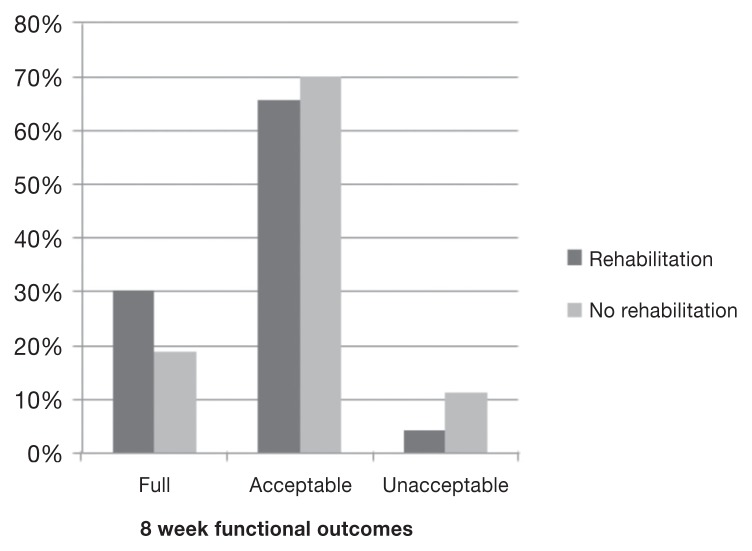
So, what does the evidence say? Not surprisingly Monk et al. (2006) found that before surgery, CCL-deficient limbs had significantly reduced thigh circumference and reduced flexion and extension movement, compared with values for the contralateral control limb. However, six weeks post-op, the physiotherapy group had significantly larger thigh circumference and greater ROM than the home-exercise group, with the difference no longer evident between the affected and nonaffected limbs. Furthermore, a study by Romano et al. (2015) found that dogs that received rehabilitation were 1.9 times more likely to return to full function (P = 0.045). Conversely, dogs in the traditional group of cage rest and leash walks were 2.9 times more likely to result in unacceptable function (P = 0.05).
These studies suggest that rehabilitation performed by a certified practitioner is safe and may improve short-term outcomes when used in the initial postoperative management for dogs treated with TPLO surgery.
Physiotherapy is not prescriptive and each dog is assessed each time and relevant treatment options selected using knowledge of surgical procedures, tissue healing times, biomechanics, current presentation, owner lifestyle and the eventual role of the dog. This quote epitomises physio rehab: “Knowledge of the stages of tissue healing and of the strength of tissues is critical to avoid placing too much stress on the surgical site, yet some challenge to tissues must be provided to optimize the return to function. “ (Davidson et al 2005) . Overall, throughout Physiotherapy rehabilitation, controlled return to function is at the top of the list. Although there are expected healing and return to function times, every dog is different as is every injury and surgery but if at any time there is an indication of a problem then the dog is referred back to the vet ASAP. Owners enjoy having physiotherapist involved in their dog’s rehab as it helps them to maintain and journey through the full recovery of their dog.
A Chartered Physiotherapist specialising in veterinary is well placed to lead the rehabilitation process though home visits or at a clinic, particularly before commencing hydrotherapy; it's safe and improves outcomes.
References:
Davidson J , et al (2005). Rehabilitation for the orthopaedic patient. Vet Clin North Am Small Anim Pract. 2005 Nov;35(6):1357-88
Monk, M., Preston, C. and McGowan, C. (2006). Effects of early intensive postoperative physiotherapy on limb function after tibial plateau leveling osteotomy in dogs with deficiency of the cranial cruciate ligament. American Journal of Veterinary Research, 67 (3), pp. 529-536
Romano et al. (2015). Safety and functional outcomes associated with short-term rehabilitation therapy in the post-operative management of tibial plateau leveling osteotomy. Canadian Veterinary Journal. Sep;56(9):942-6.
Taylor and Admason (2002) Stifle surgery and Rehabilitation. Proceedings of 2nd International symposium on Rehabilitation and Physical Therapy in Veterinary Medicine. Knoxville TN, pp 143-146. cited in McGowan C, Goff L, Stubbs N, (2007).
Shimada et al. (2020). Biomechanical Effects of Tibial Plateau Levelling Osteotomy on Joint Instability in Normal Canine Stifles: An In Vitro Study. Veterinary and Comparative Orthopaedics and Traumatology. Sep;33(5):301-307.
doi: 10.1055/s-0040-1709505.


Comments